
Bring the Wonder of the Ocean
to Your Classroom
The stunning documentary, Ocean with David Attenborough, shines a light on both the beauty of the sea and the ways in which humans are depleting its riches. The film helps viewers reflect deeply on the ocean’s significance, the threats it faces, and the solutions that can ensure its protection. While our planet’s future can sometimes feel bleak, efforts to conserve it offer glimmers of hope. Educators can be part of the solution that inspires young people — ocean stewards of tomorrow — by discussing Ocean with David Attenborough in the classroom.
For schools and educators
Request free access to Ocean with David Attenborough for use in your classroom or learning center here. National Geographic is making the documentary film available to educators at schools, universities, museums, and libraries, and for educational and charitable conferences and events for non-commercial purposes. You may not charge a fee to viewers or require paid admittance to screenings. If you are interested, fill out this form.
For discussion
Our Discussion Guide is designed to encourage thoughtful reflection and conversation about Ocean with David Attenborough. It covers three key themes of the documentary film: the importance of the ocean for life on earth, the impact of industrial fishing and ocean warming on marine life, and the benefits of marine protected areas (MPAs) to marine life, people, and our climate. Use it in your classroom, your film club, or with anyone you want to engage in dialogue about the importance of conserving the sea and how to take action in your community.
For storytelling
Everyone, everywhere can tell stories that can inspire change for our planet by using the Open Planet library. Free for education and impact, the library supports a global community of teachers, students, non-profits, campaigners, and creatives to confidently communicate about our world’s greatest challenges and solutions. It features over 14,000 clips of world-class, cinematic footage and trusted data on climate, nature and humanity, including the world’s ocean and coastal seas. Coming soon, new footage captured during the filming of Ocean with David Attenborough will help drive storytelling for the ocean on a scale never seen before. Find out more and start your story at OpenPlanet.org.
For nonprofits and coastal communities
Are you interested in educating local groups and communities about the benefits of marine protected areas? Perhaps you want to create marine reserves in your coastal hometown? Revive Our Ocean – an initiative supporting coastal communities to protect and restore their ocean backyards — can support your efforts. Click here to learn more.
About Ocean with David Attenborough
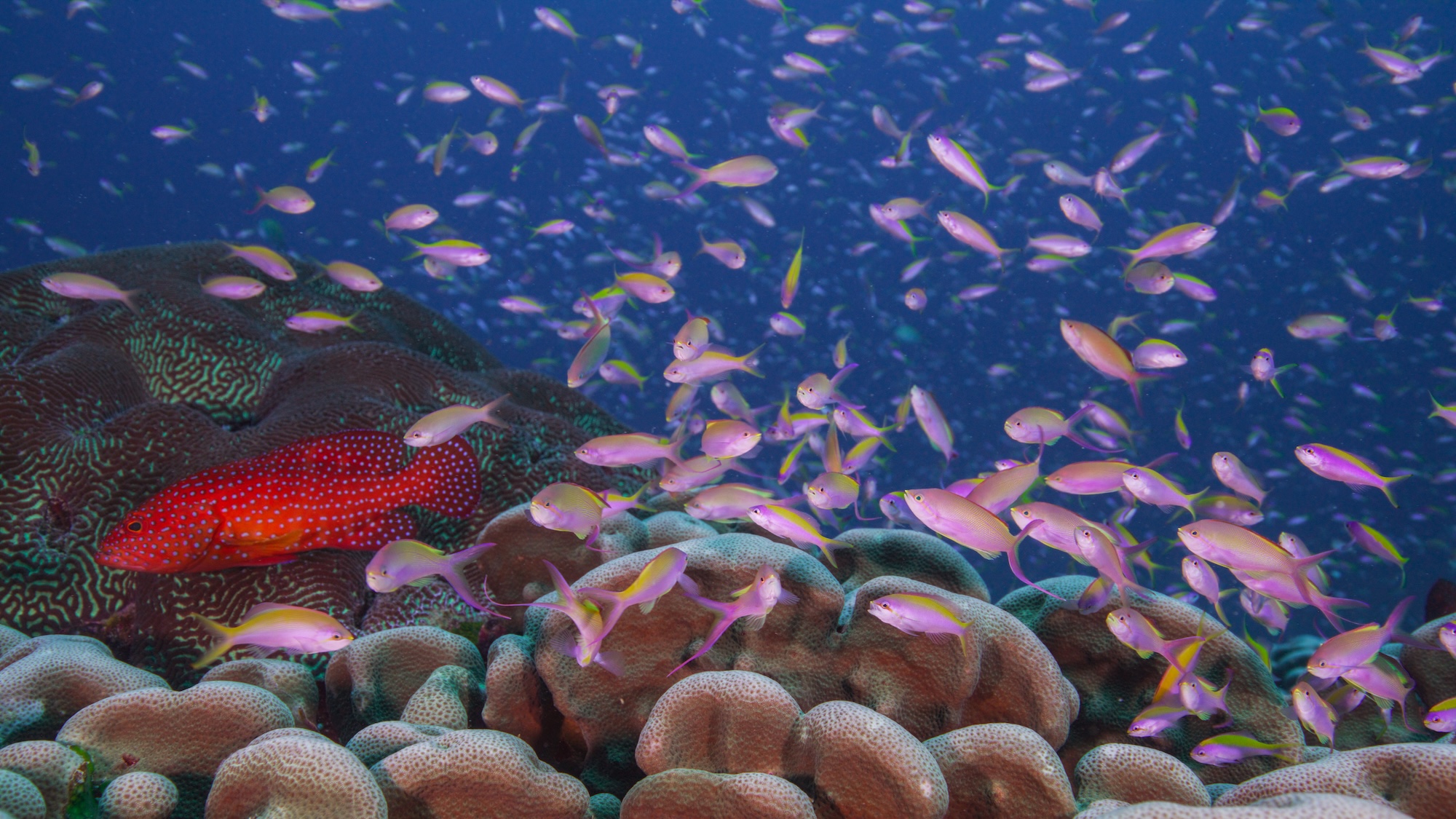
After seven decades filming every aspect of the natural world, Attenborough delivers his greatest message of hope in a spectacular new film, Ocean with David Attenborough. Through spectacular sequences of coral reefs, kelp forests and the open ocean, Attenborough shares why a healthy ocean keeps the entire planet stable and flourishing.
The documentary will play in theaters globally starting May 8, 2025, which coincides with Attenborough’s 99th birthday. The film premieres on National Geographic Channel on June 7, 2025 and streams on Disney+ and Hulu starting June 8, 2025 — World Ocean Day.
Ocean with David Attenborough is the prominent environmentalist’s first-ever collaboration with National Geographic.
Ocean with David Attenborough is a Silverback Films and Open Planet Studios co-production, in association with All3Media International, National Geographic, and Minderoo Pictures. The film is directed by Toby Nowlan, Keith Scholey and Colin Butfield and produced by Nowlan. It is co-produced by Arksen & 10% for the Ocean, Don Quixote Foundation, National Geographic Society and Pristine Seas, Revive Our Ocean, and The Prince Albert II of Monaco Foundation.
About marine protected areas (MPAs)
Earth’s vast interconnected waters play a vital role in regulating climate, producing oxygen, and supporting biodiversity. These benefits are only possible when the ocean is left to thrive in its natural state. While humans are degrading the ocean at alarming rates, there is a solution: marine protected areas (MPAs).
MPAs where fishing and other damaging activities are banned, restore marine life within their boundaries. That, in turn, replenishes nearby fish populations and improves local fishing, provides jobs and economic benefits, and builds resilience against a warming ocean. Pristine Seas’ research shows that fully protected areas, which ban extractive activities, are best for economies, biodiversity and the climate.
Pristine Seas has created this introduction to ocean conservation, so anyone can learn more about the ocean’s ability to bounce back through marine protected areas.
About National Geographic Pristine Seas
Pristine Seas is an exploration, research and filmmaking project that inspires the creation of marine protected areas (MPAs) around the world. Founded and led by National Geographic Explorer in Residence Enric Sala, the project has helped to create 29 of the largest marine reserves on Earth, which cover more than 6.9 million square kilometers of ocean. These “national parks of the sea” preserve the wonders of the ocean while increasing the food supply, providing economic benefits, and building resilience against global warming.
In 2023, Pristine Seas launched The Global Expedition: a bold conservation effort to explore little known areas of the tropical Pacific Ocean. Working aboard the Argo — a 130-foot customized research vessel and media center — local and international scientists conduct underwater research and share their knowledge, insights, and personal connection to the study areas. The ship is Pristine Seas’ modern-day equivalent of Jacques Cousteau’s famous Calypso, but with an ocean conservation mission.
Today, only 8% of the ocean is somehow protected — and less than 3% is fully protected from fishing and other damaging activities. Pristine Seas supports the global goal of conserving at least 30% of the ocean by 2030, which will not only benefit marine life but also provide value to communities.
Follow our latest expeditions @natgeopristineseas on Facebook, Instagram, TikTok, Threads, and read firsthand accounts from the ship in our Field Notes.
Learn More
Global efforts to create marine protected areas (MPAs)
National Geographic Pristine Seas
Revive Our Ocean
Global tracking of industrial fishing
A deeper dive into MPAs
Bringing the ocean back – An introduction to marine conservation
The MPA Guide
Photo credits (from top of page): Enric Sala, Manu San Félix